Showing posts with label aquatic invasive species. Show all posts

Tuesday, January 29, 2019

Steps to Actively Prevent the Spread of AIS

When winter arrives and lakes freeze over, the true test of your love of fishing becomes apparent.  Winter sportsmen are out in their shanties, drilling holes in the ice in the hopes of reeling in the "big one."  Those of us who live in areas of frozen lakes know that fish tales do not end when the boats are put away.

While these fishermen take to the lakes though they need to be aware that the threat of the spread of aquatic invasive species (AIS) does not go away.  Eurasian watermilfoil which is capable of living and growing under the ice while other invasive species may simply be dormant, they can easily be spread from one water body to another.


There are steps that can be taken to help prevent the spread:
  • Thoroughly inspect and clean all fishing equipment, line, hooks, nets, scoops and augers after each use.
  • Drain all water from equipment and containers containing fish prior to leaving the ice.
  • If you are using live bait, buy it locally from a licensed bait dealer and dispose of any unused bait properly.
  • Pack out your waste from the ice and dispose of it in appropriate waste containers.
  • Dry all your equipment for 5 or more days or disinfect it with an appropriate disinfection solution.
Do you part to stop the spread.

Sunday, April 30, 2017

Are Lake Tahoe’s Aquatic Invasive Species Edible?


Aquatic invasive species pose a significant threat to Lake Tahoe. The establishment of non-native species impacts the lake's clarity and can result in the loss of important habitat for native species.

While agencies like the Tahoe Regional Planning Agency and the UC Davis Tahoe Environmental Research Center are working to monitor, study and eradicate invasive species, some might wonder, "what can I do?" Well, for starters, you can eat them — or at least some of them.

Read More About Lake Tahoe Invasive Species

Crayfish Boil

Ingredients
  •     2 quarts water
  •     1 medium white onion, peeled and quartered
  •     1 lemon, quartered
  •     1 bay leaf
  •     2 large garlic cloves, peeled and halved
  •     1 tablespoon kosher salt
  •     3 pounds fresh live crayfish 


Fried Bluegill Fillets Recipe

Ingredients
  •     1 cup seasoned bread crumbs
  •     1 cup grated Parmesan cheese
  •     1/2 teaspoon salt
  •     1/2 teaspoon lemon-pepper seasoning
  •     1/4 teaspoon pepper
  •     6 eggs
  •     1-1/2 pounds bluegill or crappie fillets
  •     1/2 cup canola oil, divided
Full Recipe


Thursday, March 2, 2017

Finding the Right Balance of Aquatic Vegetation

Aquatic plants, whether invasive or native, can be described as either a mess or a resource.  Natural plant growth covers 20 – 40% of the water and includes a diversity of plants.   However, invasive plants such as Eurasian watermilfoil, hydrilla and water hyacinth quickly take over a lake covering 60% and sometimes 100% of the surface water. 

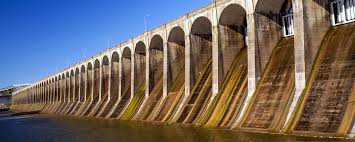
Tennessee Valley Authority is a corporate agency of the United States that provides electricity for business customers and local power distributors serving 9 million people in parts of seven southeastern states.  TVA maintains 29 power generating dams with reservoirs in addition to another 17 non-power dams that are used solely for flood control and recreation.  TVA is certainly no stranger to invasive species.

Management of invasive plants is necessary to keep the right balance between the diversity and density of plant growth. TVA has been managing invasive plants since the late 1950s, when it began to address the problem of milfoil. In the 1960s, TVA began to use helicopters to chemically eradicate weeds.

One of TVA’s management options is prevention. In some communities the spread of invasive plants have been prevented by quarantining boats on specific bodies of water to prevent transfer.
  • Physical management including the use of mechanical weed harvesters or barriers such as plastic to prevent sunlight from reaching the plants.
  • Biological methods include the introduction of grass carp to eat the weeds.
  • Chemical management includes the use of herbicides to kill the weeds.
  • Mother Nature is perhaps the most effective force in managing invasive plant growth. Many of the invasive weeds are susceptible to cold. The past few mild winters in the region might explain the increase of invasive plants on TVA waters.  


In a recent workshop on the issue of aquatic invasive species, over 200 people turned out to not only voice their concerns on the growing weed problem, but to learn how they can help in the management.


Learn More

Tuesday, November 3, 2015

Invasive North American Rainbow Trout


Lake Titicaca is South America's largest lake by volume, holding 198 cubic miles of freshwater — more water than Lake Erie, but just a fraction of Lake Michigan.

The lake rests on the border of Peru and Bolivia in the Andes Mountains, and although the region is considered the tropics, Titicaca's cold water sends a chill through the body upon touch.

The islands in Lake Titicaca may be mistaken for natural ones, but rather are woven of totora reeds. The rafts are littered with houses for the Aymara who live on the water and rely upon the lake's fish to survive. But all of the karachi in the lake are considered threatened.
 

Explorers considered the lake unproductive since all of the fish species were small.  In 1935 Peruvian and Bolivian officials met and decided that they should consider introducing supplemental fish to the lake they share. They felt the karachi were not a sufficient food source to sustain the local population.

The United States was summoned to conduct a study of Titicaca, and M.C. James, the assistant chief of fish culture for the U.S. Bureau of Fisheries, was assigned the task.

The first round of transplants — lake trout fingerlings — arrived at the lake from North America in 1938. Compared with the tiny karachi, trout were a substantial source of protein swimming through the lake's waters.

In Lake Titicaca, the trout explosion transformed local fishing practices. Rainbow trout have been the most successful of all North American trout introduced to Lake Titicaca. They are now caught by hook, farmed, sold in local markets and served in restaurants.  However, many are worried that that the traditional fishing culture will disappear as the trout decimate the karachi numbers.
  

Tuesday, September 11, 2012

10 Reasons to Care about Aquatic Invasive Species

Written by Madeline Seveland, Education Coordinator with Carver County Water Management
Invasive Species have been steadily gaining more interest with lawmakers, interest groups and the public since the introduction of zebra mussels into Lake Minnetonka and the threat of Asian carp in the Mississippi River. Here are the top ten reasons you should care about preventing the spread of AIS.

10.  CLOGGING: Aquatic invasive species can reproduce very fast and both plants and animals can form dense mats/colonies that clog waters affecting transportation (canals), hydropower and irrigation (ditches). In the early 90s, Hydrilla caused the shutdown of a hydro-electric plant resulting in a record fish kill and the company has spent more than $14 million in control since. Zebra mussels clog intake pipes all over and ruin boat motors by clogging the cooling intake. In the Great Lakes, the annual damage and control costs of zebra mussels who clog intake pipes at electric power plants and water supply facilities is $480 million.

9.  POOR WATER QUALITY: The Great Lakes Water Quality Agreement notes that AIS degrade water quality by increasing turbidity (sediment & algae) and nutrients, reducing dissolved oxygen and concentrating toxins. An example found in many Minnesota lakes and rivers is common carp. These fish are “bottom feeders” and their feeding disrupts shallowly rooted plants muddying the water and releasing phosphorus that leads to algae blooms.

8.  SPREAD OF DISEASE: Many parasites and bugs benefit from thick patches of vegetation. One example is swimmers itch. Eurasian Water Milfoil (EWM) provides good habitat for the parasites that cause swimmers itch (Cercarial dermatitis and Schistosome dermatitis) increasing their numbers.

7.  RECREATIONAL IMPACTS: Lake Tahoe in CA is infested with Eurasian Water Milfoil (EWM).  Water based recreation trips to Lake Tahoe are conservatively estimated at bringing in between $35 and $45 million a year. EWM decreases water quality, clogs boat motors and cooling intakes and the spread of EWM could lead to decrease in recreational uses. Just a 1% decrease in recreation would drop the economic recreational income $500,000 a year.

6.  DECREASE IN PROPERTY VALUES: A paper written by Eric J. Horsch from Stratus Consulting and David J. Lewis from the University of Wisconsin analyzed property values on 170 lakes in northern WI and found property values fell 13% after invasion of Eurasian Water Milfoil. Other studies have found property values to drop 20-40%.

5.  WILDLIFE HEALTH: In addition to the loss of habitat, food, and shelter that affect wildlife when an invasive species moves in, we can add disease. Great Lakes scientists are researching their theory that zebra mussels promote conditions for avian botulism (botulism type E) to grow. It is one of the most toxic substances on earth. On the shores of Lake Michigan it has been the cause of thousands of bird and other wildlife deaths over the past few years.

4.  HUMAN HEALTH: Invasive aquatic plants have become so thick they increased the risk of drowning. One of the most well documented stories took place in Royal City, WA when two men jumped into Red Rock Lake to rescue a boy who became entangled in EWM.  The boy and one man were rescued, the third was so entangled in weeds it took five divers to disentangle his body. Adding to that, zebra mussels have razor sharp shells that can leave painful wounds on your feet if stepped on.

3.  ECONOMY: Much of Minnesota’s economy relies on tourism. Hospitality Minnesota is the third largest employer in the state which includes restaurants, lodgings, resorts & campgrounds, etc.  Much of this industry relies on healthy lakes and rivers. Waters with AIS infestations will see fewer users leading to reduced business and lost jobs. John Madsen, an Associate Research Professor in the Geosystems Research Institute and the Department of Plant and Soil Sciences, Mississippi State University put it simply, “Managing these species economically beats not managing them.”

2.  FISHERIES: Zebra Mussels may clear up the water, but they do so by removing phytoplankton which is the very basis of the food chain. Without phytoplankton, zooplankton populations decrease, resulting in a decrease small fish (planktavores) and then a decrease in game fish (piscivores).  In addition, the clear water allows more sunlight to reach the bottom of the lake resulting in more aquatic plant growth. If there is an invasive plant like EW milfoil established, its population can explode. In short, ZM could = more weeds and less fish.

1.  LONGETIVITY: Many of us will have children and grandchildren. When we are gone we will be leaving our favorite fishing spots, our lake cabins, our tourism businesses, and our stories to our children and grandchildren and will hope they too can enjoy thrill of catching fish, boating, or walking on the beach without risk of cutting up their feet.

Information and examples for this article came from the following sources: Environmental Protection Agency, Journal of Weed Science, MN DNR, MN Sea Grant, WI Sea Grant, Great Lakes Fishery Commission, and MN Dept. of Natural Resources.