Showing posts with label aquatic vegetation. Show all posts

Thursday, March 2, 2017

Finding the Right Balance of Aquatic Vegetation

Aquatic plants, whether invasive or native, can be described as either a mess or a resource.  Natural plant growth covers 20 – 40% of the water and includes a diversity of plants.   However, invasive plants such as Eurasian watermilfoil, hydrilla and water hyacinth quickly take over a lake covering 60% and sometimes 100% of the surface water. 

Tennessee Valley Authority is a corporate agency of the United States that provides electricity for business customers and local power distributors serving 9 million people in parts of seven southeastern states.  TVA maintains 29 power generating dams with reservoirs in addition to another 17 non-power dams that are used solely for flood control and recreation.  TVA is certainly no stranger to invasive species.
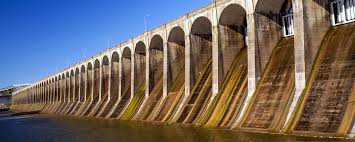
Management of invasive plants is necessary to keep the right balance between the diversity and density of plant growth. TVA has been managing invasive plants since the late 1950s, when it began to address the problem of milfoil. In the 1960s, TVA began to use helicopters to chemically eradicate weeds.

One of TVA’s management options is prevention. In some communities the spread of invasive plants have been prevented by quarantining boats on specific bodies of water to prevent transfer.
  • Physical management including the use of mechanical weed harvesters or barriers such as plastic to prevent sunlight from reaching the plants.
  • Biological methods include the introduction of grass carp to eat the weeds.
  • Chemical management includes the use of herbicides to kill the weeds.
  • Mother Nature is perhaps the most effective force in managing invasive plant growth. Many of the invasive weeds are susceptible to cold. The past few mild winters in the region might explain the increase of invasive plants on TVA waters.  


In a recent workshop on the issue of aquatic invasive species, over 200 people turned out to not only voice their concerns on the growing weed problem, but to learn how they can help in the management.


Learn More

Sunday, January 3, 2016

Focus on Restoration of Aquatic Vegetation


For years it has been about getting rid of aquatic vegetation, but perhaps 2016 will be a year to focus on the restoration and the necessity of these plants to create a healthy fishery and the overall health of the ecosystem.

Marsh Lake lies within the Lac qui Parle Wildlife Management area, which is managed by the Minnesota Department of Natural Resources. In the fall, as many as 150,000 Canada geese use the management area at one time. Marsh Lake is also home to Minnesota’s largest breeding colony of American white pelicans and several species of fish.

This past year, DNR crews surveying the lake were only able to find one stand of Sago pondweed. It’s a staple food source for migrating waterfowl, and one of the reasons that Marsh Lake was once known as a duck hunter’s mecca. The lake once held beds of thick Sago pondweed. Healthy stands of submerged aquatic vegetation provide food for waterfowl, habitat for other migratory birds, fish and crabs.

A key component of the project is to do what nature once did, and allow lake levels to fluctuate. A fixed-crest dam installed in 1937 has not allowed for natural fluctuations and as a result, contributed to the demise of aquatic vegetation that relies on natural water level cycles.

The Marsh Lake project calls for adding a sluice gate structure to the fixed-crest dam to allow periodic drawdowns of the lake to allow aquatic vegetation to re-establish itself.  The plan would also include elements to improve fishery habitat and stabilize the riverbanks by restoring natural vegetation.

Lake Mattamuskeet is the centerpiece of the Mattamuskeet National Wildlife Refuge located in North Carolina.   The lake is home to an abundant diversity of wildlife — from the hundreds of thousands of waterfowl that winter on the lake each year to a unique fishery that consists of both freshwater and estuarine species.  

Beginning in 2016, a habitat enhancement project will be implemented; focusing on maintaining submerged aquatic vegetation parts of the lake as well as increasing aquatic vegetation coverage in other areas.  Healthy stands of submerged aquatic vegetation provide food for waterfowl, habitat for other migratory birds, fish and crabs. Submerged aquatic vegetation is very limited in the west basin of Lake Mattamuskeet, and in recent years has steadily declined in the east basin.

Read More About Marsh Lake

Read More About Lake Mattamuskeet