Showing posts with label mechanical harvester. Show all posts

Thursday, March 2, 2017

Finding the Right Balance of Aquatic Vegetation

Aquatic plants, whether invasive or native, can be described as either a mess or a resource.  Natural plant growth covers 20 – 40% of the water and includes a diversity of plants.   However, invasive plants such as Eurasian watermilfoil, hydrilla and water hyacinth quickly take over a lake covering 60% and sometimes 100% of the surface water. 

Tennessee Valley Authority is a corporate agency of the United States that provides electricity for business customers and local power distributors serving 9 million people in parts of seven southeastern states.  TVA maintains 29 power generating dams with reservoirs in addition to another 17 non-power dams that are used solely for flood control and recreation.  TVA is certainly no stranger to invasive species.
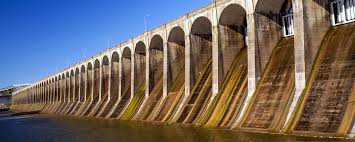
Management of invasive plants is necessary to keep the right balance between the diversity and density of plant growth. TVA has been managing invasive plants since the late 1950s, when it began to address the problem of milfoil. In the 1960s, TVA began to use helicopters to chemically eradicate weeds.

One of TVA’s management options is prevention. In some communities the spread of invasive plants have been prevented by quarantining boats on specific bodies of water to prevent transfer.
  • Physical management including the use of mechanical weed harvesters or barriers such as plastic to prevent sunlight from reaching the plants.
  • Biological methods include the introduction of grass carp to eat the weeds.
  • Chemical management includes the use of herbicides to kill the weeds.
  • Mother Nature is perhaps the most effective force in managing invasive plant growth. Many of the invasive weeds are susceptible to cold. The past few mild winters in the region might explain the increase of invasive plants on TVA waters.  


In a recent workshop on the issue of aquatic invasive species, over 200 people turned out to not only voice their concerns on the growing weed problem, but to learn how they can help in the management.


Learn More

Monday, July 2, 2012

Phragmites: Big Grass - Big Problem

A fairly dry winter with very little snowfall plus near drought like conditions this summer has lead to even more aquatic plants.  Another invasive species is quickly filling in exposed lake beds which are occurring due to historic low water levels.  Phragmites, the Common Reed, is a large perennial grass that can grow up to 20 feet tall, not only blocking shoreline views, but it reduces habitats for a variety of animals and competes with native plants for limited resources including habitat, food, and light.
Phragmites is found on every continent except Antarctica.  This colonial plant is capable of forming large stands or colonies arising from one or a few seeds or plant pieces.  These colonies form along the margins of streams and in marshes and ditches.  They form in brackish water and in mucky moist soil of exposed lakebed and coastal wetlands.  It will grow in damp ground, in standing water up to three feet deep, and even as a floating mat. 
The extensive reed beds can spread at sixteen feet or more per year by horizontal runners, which put down strong, deep roots at regular intervals.  The stems grow from six feet to twenty feet tall, with thick feathery plumes of seeds.  The tallest Phragmites plants are common in areas with hot summers and fertile growing conditions.  Eradication of Phragmites is not likely once it successfully invades an area, but with proper control methods and annual maintenance, native plant populations can be reestablished, wildlife and wetland habitat improved, and recreational opportunities restored.
Phragmites is a very aggressive plant and outcompetes nearby vegetation for limited resources including habitat, food, and light.  It grows so tall and the thick feathery plumes shade out native vegetation and makes coastal shorelines and wetlands unfit for wildlife.  One study has determined that the plants growth have reduced suitable nesting habitat for several species of turtles by affecting nest temperature.
Control of Phragmites is more easily achieved in areas where growing seasons are short and plant growth is less vigorous.  Control methods include spraying herbicides, mowing, discing, bulldozing, crushing, shading, dredging, flooding, draining, burning, and grazing; although a combination of treatments is most effective.  After successful treatment, native plants will once again become established in these areas.
 The Aquarius Systems Swamp Devil can easily chop through the thick Phragmites.  This heavy duty shredder effortlessly plows through the stubborn growth while carving through the subsoil creating an open water channel up to three feet deep and eight feet wide.  An aquatic weed harvester can then follow behind collecting the chopped vegetation for disposal.  The Swamp Devil easily maneuvers in shallow environments such as wetlands and marshy aquatic areas. 
While not specifically designed for Phragmites removal one of Aquarius Systems customers has achieved success in reclaiming a pond from the over abundance of Phragmites.  An EH-220, one of our smaller aquatic weed harvesters, ran for six hours per day for six weeks to clear a 20 acre pond of Phragmites and other aquatic invasive species. 


Watch the Swamp Devil in Action

Read more about the EH-220 versus phragmites 

Friday, December 16, 2011

Weed harvesters as workboats - WorkBoat.com

Weed harvesters as workboats

11/15/2011

As we've been following efforts by folks such as those along the Cuyahoga River to establish greenery along previously dead rivers, perhaps opening them to more passenger vessel traffic as people again see these rivers as something they'd like to ride along, our attention was grabbed by a class of workboats that specializes in this area. 
Such as those made by Aquarius Systems, who recently posted a video of their latest delivery. If nothing else, they're kind of cool looking:


Wednesday, November 16, 2011

A Success Story - Lake Minnewawa Weed Harvesting

In the 1970’s, Lake Minnewawa was so choked with weeds that residents could no longer enjoy the lake.  Boating was impossible and water clarity and phosphorous levels were awful.  A group of concerned residents decided they needed to do something to save the lake and on December 15, 1977 as association was formed calling itself Save Minnewawa Association.

In 1982 the association purchased their first weed harvester and trailer, which was replaced in 1994 by a larger, but used 1987 Aquarius Systems 620 harvester, that is still in use today.  The association does not receive state funds to run the harvester; it is financed by membership, business, and other local group donations along with fund raisers.  The work required to run the machine is immense and there are a lot of donated hours by board members and volunteers to keep the equipment running.

620 Aquatic Weed Harvester

Three months out of the year the harvester runs five days a week about 8 hours a day (weather permitting) to maintain the 4,500 acre lake.  Not all of the lake gets cut either, there are designated no cut areas established by the DNR and certain native plants aren’t cut like lily pads, wild rice, and bulrush.  Since the harvester has been in use not only has the amount of weeds decreased, but water clarity has significantly increased as well.

A big reason for this is because there are fewer weeds dying in the lake and decomposing to the bottom.  If the vegetation is left to rot, the nutrients in it that have been absorbed from the water are released back to the water column and become nutrients for the next weed growth or algae bloom. But something far worse occurs; as the vegetation decays, it uses up the oxygen at the bottom which affects fish as well as native plants.  The weeds contain a huge amount of phosphorous which is being removed along with the weeds, the more phosphorous in a lake, the more algae growth, therefore the lower water clarity.

Some people in the area don’t believe in the weed harvester and feel that cutting the weeds leads to more growth, but Steve Olson, LMA board member disagrees.  “If that were the case, then they would have never needed to harvest here in the first place.”  Other people have suggested controlling the weeds with chemicals instead of the harvester, but the cost is very prohibitive with a price tag of half a million dollars compared to the $25,000 a year it takes to run and maintain the weed harvester.

With the aid of the Aquarius Systems weed harvester and 18 years of sufficient lake improvements, Save Minnewawa Association officially changed their name in 1995 to Lake Minnewawa Association (LMA).